How much of your plastic has to go?
Not as much as you might think – and knowing which saves you real time and money.
Plastic’s everywhere at the moment – in the news, in documentaries, and in every cupboard in the house. It’s also where this program began. We started out assuming every plastic item had to go, and built the first version of the list that way. Running each one through the three gates took a fair few of them back off it.
That’s because the plastic itself is rarely the issue. What comes loose from it is.
What actually comes loose
Most plastic is a solid material with extras added to it. In a rigid, fully hardened plastic, that material holds on to almost everything. Soft and flexible plastics are different: the plasticisers that make them bend sit loosely inside and can move into whatever they touch. Coatings and printing leave residue on the surface. And plastic that’s scratched, worn or rubbed sheds tiny fragments.
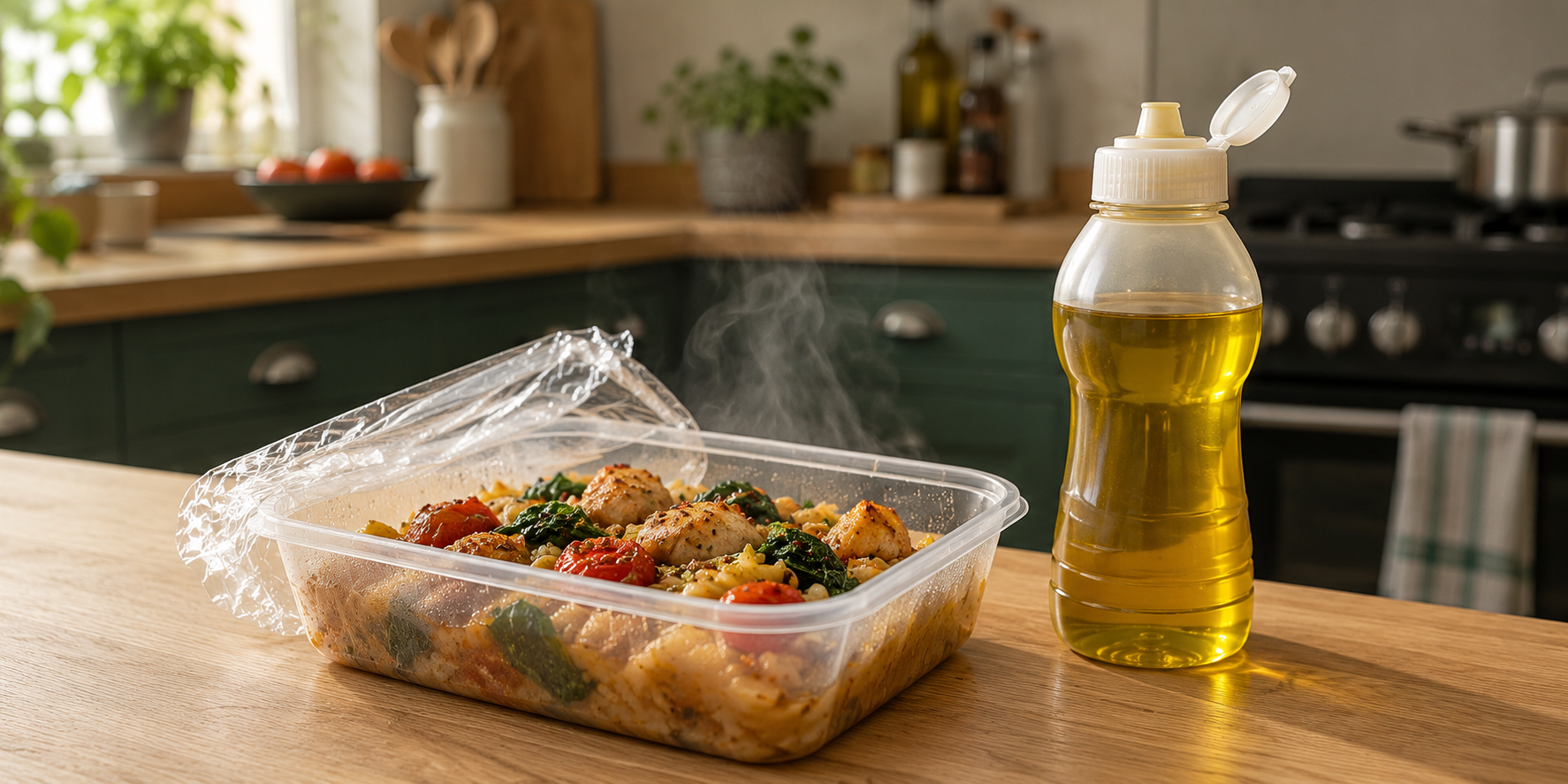
Where plastic is worth swapping
Heat speeds everything up. Oily and acidic foods pull more across than dry ones, and time adds to both. So the plastic worth your attention is the plastic where those things line up.
Worth a swap: soft or flexible plastic that touches food or drink, especially when it gets hot.
Safe to skip: rigid plastic that never gets near food or heat, like a laundry basket or an outdoor chair – however much of it you own.
Food is the clearest case, but not the only one. Plastic also reaches you as fibres shed into the air you breathe, and as dyes and residues on things that sit against your skin or go in your mouth. All of it gets decided by the same three-gate test as everything else in the program.
Why not just clear it all out?
Because you’d spend a lot of money and a lot of weekends replacing things that were never the problem. Members still end up swapping plenty of plastic – the point is that every one of those swaps earns its place.
The rule of thumb gets you started. The detail is where it gets harder: which items in which rooms, what to replace them with (some ‘plastic-free’ swaps are lined with plastic on the inside), and which ones to do first so the cost stays manageable. That’s what the program works through, one category at a time.
Want to keep up with this? One email a fortnight – new research, swaps worth making, and claims that don’t hold up.